Dispatch Review respectfully acknowledges the Whadjuk people as the traditional owners and custodians of the lands upon which we live and work. We pay deep respect to Elders past and present. Always was, always will be Aboriginal land.
Reviews:
- There is nothing you need to do here, by Riley Landau.
- All alone in the dark: After Elvira Madigan (1967), Salon dans l’obscurité, by Amy Hickman.
- Hatched Dispatched 2026 by Lilian Brown, Lucy Kilroe, Riley Landau, Cassandra Otterman-Emmett, and Charlotte Newman.
- Felix McNamara’s Atrocities by Patrick Zaia.
- Once More with Feeling by Grace Coppola.
- Deanna Hitti's Dangerous Pleasures by Anna Daly.
- Sherrie Levine: Press Release by Sam Beard.
- BCC at Blindside by Diego Ramírez.
- Jack Ball, Mystery Solved by Siân McIntyre.
- 2026 Power 100 by Dispatch Review.
- Patches in a Glowing Landscape: A Reading Gregory Pryor’s Huddle Exhibition by Jonathan W. Marshall.
- Pure Intention: Singapore Biennale 2025–26 by Marco Marcon.
- Gemma Weston, WITNESSING by Sam Beard and Francis Russell.
- Painting Itself: Artist Interviews by Felicity Ostergaard and William Bromage.
- Flooding The Zone by Paul Sutherland.
- Something Old, Something New by Duncan McKay.
- Theo Koning by Marco Marcon.
- Jacob Kotzee: Stimela by Grace Coppola.
- Feel Bad Hit of the Summer Pt. 2 by Francis Russell.
- Isn’t there someone you forgot to ask? by Amy Hickman.
- Isabel Bereczky: Outsole by Chelsea Hopper.
- On Dreaming by Stirling Kain.
- Feel Bad Hit of the Summer Pt. 1 by Francis Russell.
- Lucas “Granpa” Abela at _____g.s by Nalinie See.
- Alana Hunt, A Deceptively Simple Need, PICA by Marco Marcon.
- Wang Qingsong’s Everlasting Inscription by Sam Beard.
- Dispatch Review's 2025 Wrap-up.
- Ripairian: Imprinting the Living Landscape by Annette Peterson.
- Corpse-Watching Comes to Perth by Riley Landau.
- Queering Kin: Amos Gebhardt’s Family Portrait by Riley Landau.
- Forget AI by Francis Russell.
- Acid Utopia: Judgment Day by Aimee Dodds.
- Mollescent Irritant: Liam Gillick at Disneyland Paris by Aimee Dodds.
- Kieron Broadhurst and Ash Tower: Border Chronicle by Soph Grey.
- Nan Goldin, Voyeurism, and the NGA by Jess van Heerden.
- Bombard the Headquarters: An Interview with Linda Jaivin by Sam Beard.
- Hatched Dispatched 2025, by Maraya Takoniatis, Riley Landau, Nalinie See, Kye Fisher, and Jess van Heerden.
- Sneak Out by Tara Heffernan.
- By Chance, Li Gang by Sam Beard.
- Nazila Jahangir, Immigration by Sam Beard.
- Regenerative Strategies: A Celestial Reflection by Jess van Heerden.
- Cast in (Mostly) Bronze at AGWA by Riley Landau.
- Missed Shows and Mini Reviews by Darren Jorgensen, Riley Landau, Amelia Birch, and Sam Beard.
- 2025 Power 100, by Dispatch Review.
- Dan Bourke, Keywords, AVA by Francis Russell.
- Revivification at AGWA by Angus Bowskill.
- The Australian Dream and other Fictions by Jess van Heerden.
- The Vessel Report by Sam Beard.
- Jacob Kotzee’s flowerfield by Scott Price.
- Jeff Gibson: False Gestalt by Francis Russell.
- Skyward, or Boonji Spaceman and the Giant Kebab by Nick FitzPatrick.
- Sam Bloor and Jesse Marlow: Street Posters 2020–2025 by Sam Beard.
- Mervyn Street: Stolen Wages by Darren Jorgensen.
- 100 Sculpture Ideas for Sculptures by the Sea by Rainy Colbert.
- Kate Mitchell’s Idea Induction by Amelia Birch.
- Mai Nguyễn-Long’s Doba Nation by Sam Beard.
- A conversation with Jo Darbyshire, by Stirling Kain.
- Dispatch Review’s 2024 Wrap-up.
- The people yearn... by Max Vickery and Erin Russell.
- An invitation to dance by Sam Beard.
- We Talk, We Discuss: An Interview with Taring Padi by Max Vickery.
- AGWA x PrideFEST by Felicity Bean.
- Tim Meakins, Body Mould by Sam Beard.
- Nick FitzPatrick, Hero Image by Francis Russell.
- Jacob Kotzee, Arrangements by Dan Glover.
- Hollow Icons: Desmond Mah at Mossenson by Darren Jorgensen.
- Pilgrimage: An interview with Vedika Rampal.
- The UnAustralian: Doubling Double Nation – An interview with Rex Butler.
- Negative Criticism: A Year of Dispatch Review by Tara Heffernan.
- Custodians as Reverse Monument by Darren Jorgensen.
- End of History – LWAG by Francis Russell.
- Hatched Dispatched 2024 by Dan Glover, Jess van Heerden, Nalinie See & Sam Beard.
- David Bromfield: A critic at large and ‘Where did the artists go?’
- Me, Also Me by Sam Beard.
- Paper Trails Between Lion and Swan by Sam Beard.
- Ceramically Speaking by Ben Yaxley.
- The Strelley Mob by Sam Harper.
- Rone: The Mighty Success by Leslie Thompson.
- Paper Trails: An interview with Yeo Chee Kiong by Sam Beard.
- 2024 Power 100 by Dispatch Review.
- Foresight & Fiction by Ben Yaxley.
- Twin Peaks Was 30 by Matthew Taggart.
- Breaking News: It’s Rone! by Sam Beard.
- Look, looking at Anna Park by Amelia Birch.
- The Fan by Francis Russell.
- Follower, Leader by Maraya Takoniatis.
- Wanneroo Warholamania by Sam Beard.
- Death Metal Summer by Sam Beard.
- Players, Places: Reprised, Renewed, Reviewed by Aimee Dodds.
- Scholtz: Two Worlds Apart by Corderoy, Fisher, Flaherty, Wilson, Fletcher, Jorgensen, & Glover.
- Partial Sightings by Sam Beard.
- True! Crime. by Aimee Dodds.
- The Human Condition by Rex Butler.
- Rebecca Baumann’s Light Event by Sam Beard.
- Rejoinder: Archival / Activism by Max Vickery.
- Access and Denial in The Purple Shall Govern by Jess van Heerden.
- 4Spells by Sam Beard.
- Abstract art, DMT capitalism and the ugliness of David Attwood’s paintings
by Darren Jorgensen. - Unearthing new epistemologies of extraction by Samuel Beilby.
- Seek Wisdom by Max Vickery.
- Something for Everyone by Sam Beard.
- Violent Sludge by Aimee Dodds.
- State of Abstraction by Francis Russell.
- Double Histories: Special Issue, with texts by Ian McLean, Terry Smith, and Darren Jorgensen & Sam Beard.
- Six Missing Shows by Sam Beard.
- What We Memorialise by Max Vickery.
- At the End of the Land by Amelia Birch.
- The beautiful is useful by Sam Beard.
- ām / ammā / mā maram by Zali Morgan.
- Making Ground, Breaking Ground by Maraya Takoniatis.
- Art as Asset by Sam Beard.
- Cactus Malpractice by Aimee Dodds.
- Sweet sweet pea by Sam Beard.
- COBRA by Francis Russell.
- PICA Barn by Sam Beard.
- Gallery Hotel Metro by Aimee Dodds.
- A Stroll Through the Sacred, Profane, and Bizarre by Samuel Beilby.
- Filling in the Gaps at Spacingout by Maraya Takoniatis.
- Disneyland Cosmoplitanism by Sam Beard.
- Discovering Revenue by Amelia Birch.
- Uncomfortable Borrowing by Jess van Heerden.
- It’s Not That Strange by Stirling Kain.
- Hatched Dispatched 2023 by Sam Beard & Aimee Dodds.
- Fuck the Class System by Jess van Heerden, Jacinta Posik, Darren Jorgensen, et al.
- Wild About Nothing by Sam Beard.
- Paranoiac, Peripatetic: Pet Projects by Aimee Dodds.
- An Odd Moment for Women’s Art by Maraya Takoniatis.
- Transmutations by Sam Beard.
- The Post-Vandal by Sam Beard.
- Art Thugs and Humbugs by Max Vickery.
- Disneyland, Paris, Ardross and the artworld by Darren Jorgensen.
- Bizarrely, A Biennale by Aimee Dodds.
- Venus in Tullamarine by Sam Beard.
- Weird Rituals by Sam Beard.
- Random Cube by Francis Russell.
- Yeah, Nah, Rockpool by Aimee Dodds.
- Towards a Blind Horizon by Kieron Broadhurst.
- Being Realistic by Sam Beard.
At the edge of Northbridge sits a
pocket of the city that feels almost self-contained. It is an eclectic corner
crowded with late-night eateries, gaming rooms, and bubble tea counters. Tucked
among these fluorescent shopfronts and the steady hum of foot traffic is
_____g.s (otherwise
known as Underscore Gallery Space), an unlikely yet fitting home for some of
Perth’s more experimental art practices. It is a venue where the grit of the
local art scene brushes up against the everyday rhythms of the neighbourhood,
never fully separating itself from the street outside. It is this uneasy
proximity between an art space and street life that makes _____g.s particularly
receptive to a performance artist like Lucas “Granpa” Abela, formerly known as
Justice Yeldham. Abela’s work pushes sound beyond conventional musical
structures, finding its footing in environments that resist polish and
predictability. Even before Abela produced a single sound, the setting itself
suggested that this would not be a performance for passive listening, but one
requiring a more deliberate and attentive form of engagement.
That expectation is inextricably linked to Abela’s long-standing practice. As an Australian experimental musician and performance artist, he has spent more than two decades operating at the outer limits of noise music, where sound functions less as composition and more as a physical and psychological force. His performances often involve large shards of glass treated as instruments, generating harsh, unstable sounds that blur the boundaries between music, bodily endurance, and sensory confrontation. Touring extensively both in Australia and internationally, Abela has developed a reputation for intensity and abrasiveness. Yet beyond the immediate shock value of his performances, Abela’s practice is driven by a sustained interest in how sound can disrupt habitual listening and unsettle an audience’s relationship to comfort and control. During his performance at _____g.s, these concerns became materially and perceptually present. The work unfolded less like a sequence of moments and more like an atmosphere that settled over the room. Sound arrived abruptly, jagged, and unannounced, then lingered in uneasy suspension. There was no sense of build or release, only a steady insistence that refused to guide the listener toward any point of orientation. Time stretched and compressed in strange ways, with each burst of sound blurring into the next, making it difficult to anticipate what might follow or when it might end.
While Abela’s practice is often framed through its extremity, my response oscillated between fascination and resistance. I liked the performance not despite its discomfort, but because of it; it scratched an itch in my brain while simultaneously making me want to claw at my own skin. That conclusion, however, took time to arrive. My initial response was shaped by the absence of anything familiar to hold onto. With no rhythm to follow or pattern to settle into, I struggled to find my footing as a listener. Instead of being carried by the sound, I became acutely aware of my own mind at work, searching for structure and anticipating change but repeatedly encountering refusal. Over time, that resistance became the source of the work’s appeal. The performance demanded a relinquishing of control, keeping both body and attention in a state of heightened alertness. What began as discomfort gradually shifted into a form of cognitive stimulation with an insistence on staying present. At moments, the sound felt less like something entering through the ears than something pressing against the body, vibrating through the room and making sustained attention feel physical, almost muscular. In this way, enjoyment emerged not through ease or familiarity, but through the ongoing friction between a desire for order and its persistent denial.
Rather than losing myself in the sound, I became increasingly aware of my own efforts to impose structure on it. What held my attention was not unease alone, but a growing curiosity about the psychology of noise music, specifically what draws some listeners toward its raw intensity while leaving others feeling uncertain and unsettled. Abela’s work operates where sound slips into sensation, foregrounding the mental and bodily dynamics that shape how audiences encounter noise. Noise theorist Paul Hegarty describes noise music as existing in a space of productive discomfort. This space hovers between attraction and irritation, pleasure and repulsion.[1] That ambivalence felt palpable throughout Abela’s performance. Deprived of any stable point of entry, the listener was held in a constant state of attentiveness. The work, instead of offering release or resolution, demanded presence, refusing to settle into something legible or comforting. This helps explain why responses to noise music are often so polarised: for some, the intensity sharpens focus and heightens sensory engagement; for others, it triggers resistance as the mind searches for patterns that never materialise.
![]()
Across the room, however, the audience appeared strikingly receptive. Heads bobbed in loose, unselfconscious rhythm, bodies subtly moving perceptibly in response to the jagged sound. The atmosphere felt attentive as opposed to tense, as if many listeners had already accepted the terms of the encounter and were moving with the noise instead of against it. This physical responsiveness suggested a familiarity with discomfort, a willingness to allow sound to register through the body rather than be neatly interpreted. Throughout the performance, the mechanisms listeners typically rely on to orient themselves were systematically denied. Without rhythm or progression to anchor attention, the work offered no basis for anticipation or coherence. This denial of recognisable musical cues ultimately shaped its appeal, requiring endurance instead of immersion and positioning discomfort as an active mode of engagement. In line with Hegarty’s framing, enjoyment emerged through the ongoing oscillation between attraction and irritation, keeping the listener alert, unsettled, and engaged.
In this context, the performance worked not by overcoming discomfort, but by sustaining it. Abela’s joyful denial of resolution or ease was deliberate yet never alienating, positioning endurance as a central part of the listening experience. What lingered was not a melody, moment, or release, but an awareness of how attention was being held, tested, and repeatedly redirected. The work asked for commitment rather than surrender, rewarding persistence with heightened sensitivity rather than comfort.
_____g.s proved to be a fitting site for this encounter. Its proximity to the street, modest scale, and resistance to polish mirrored the conditions of the performance itself. The space did not insulate the work from the world outside, nor did it soften its edges. Instead, it reinforced the sense that this was an experience unfolding within everyday life, not apart from it, one that demanded presence amid distraction. In an era where listening is often fragmented and mediated, Abela’s performance foregrounded attention as something physical, effortful, and, at times, uncomfortable. It challenged the expectation that engagement should be seamless or immediately gratifying, suggesting instead that sustained focus may require friction. In doing so, the work reframed discomfort not as a barrier to enjoyment, but as a condition through which a different kind of listening might emerge.
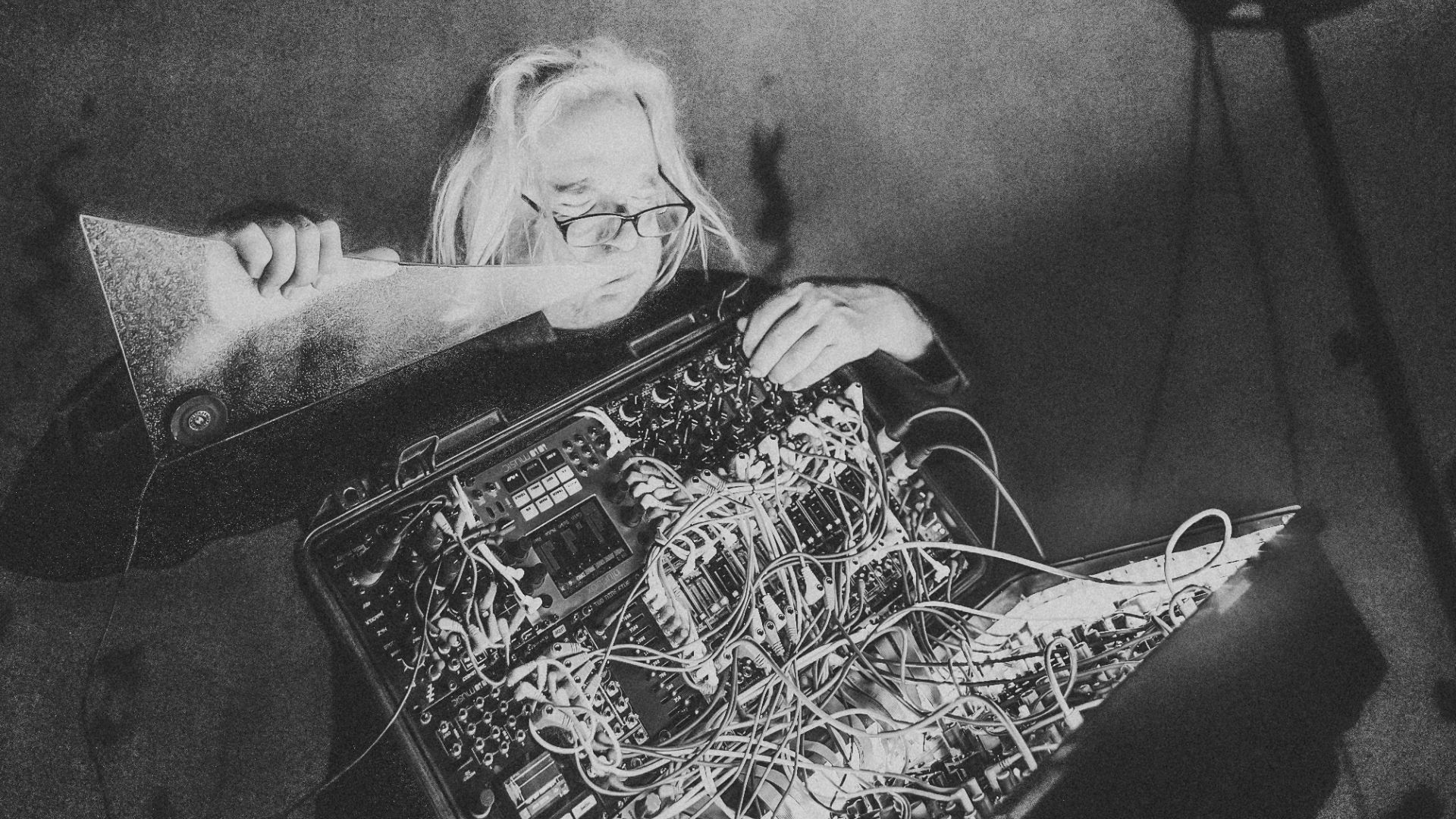
Lucas “Granpa” Abela’s performance took place at _____g.s on 22 November 2025.
Footnote:
1. Paul Hegarty, Noise/Music: A History (New York: Continuum, 2007), Introduction, pp. 1–7.
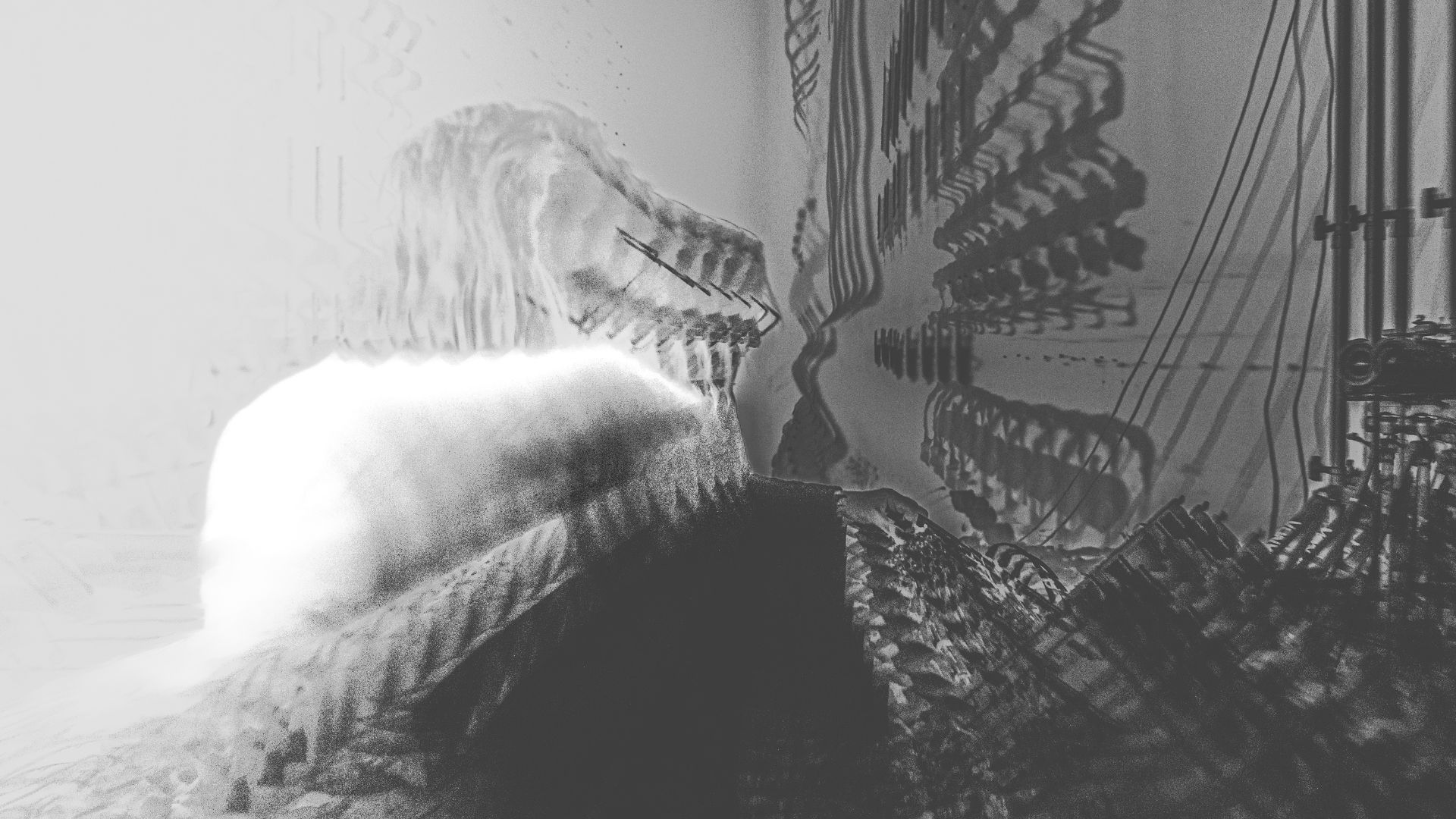
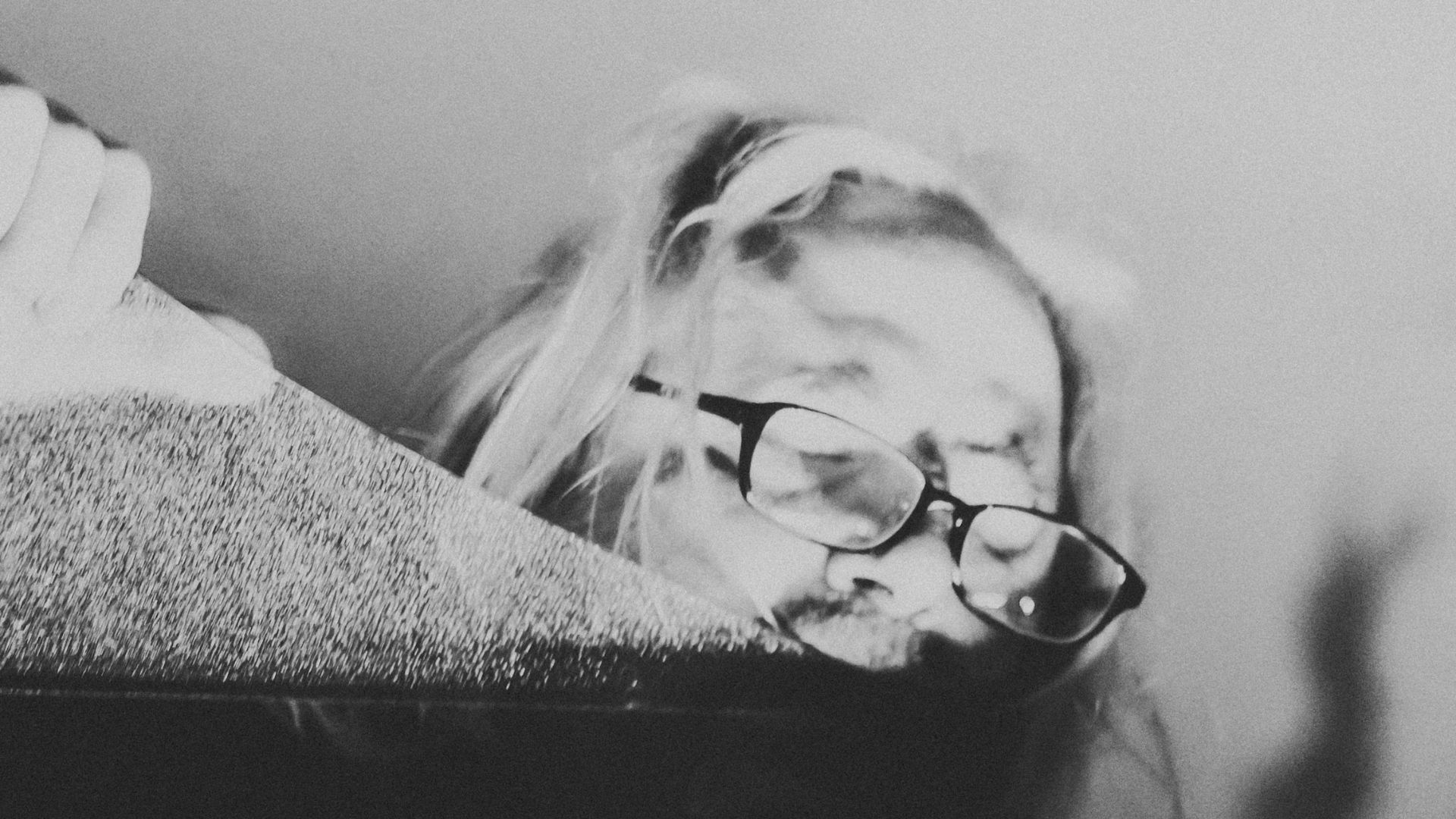
Image credits: Lucas Abela performing at _____g.s, photographed by Joe Rae @convectionpattern.
That expectation is inextricably linked to Abela’s long-standing practice. As an Australian experimental musician and performance artist, he has spent more than two decades operating at the outer limits of noise music, where sound functions less as composition and more as a physical and psychological force. His performances often involve large shards of glass treated as instruments, generating harsh, unstable sounds that blur the boundaries between music, bodily endurance, and sensory confrontation. Touring extensively both in Australia and internationally, Abela has developed a reputation for intensity and abrasiveness. Yet beyond the immediate shock value of his performances, Abela’s practice is driven by a sustained interest in how sound can disrupt habitual listening and unsettle an audience’s relationship to comfort and control. During his performance at _____g.s, these concerns became materially and perceptually present. The work unfolded less like a sequence of moments and more like an atmosphere that settled over the room. Sound arrived abruptly, jagged, and unannounced, then lingered in uneasy suspension. There was no sense of build or release, only a steady insistence that refused to guide the listener toward any point of orientation. Time stretched and compressed in strange ways, with each burst of sound blurring into the next, making it difficult to anticipate what might follow or when it might end.
While Abela’s practice is often framed through its extremity, my response oscillated between fascination and resistance. I liked the performance not despite its discomfort, but because of it; it scratched an itch in my brain while simultaneously making me want to claw at my own skin. That conclusion, however, took time to arrive. My initial response was shaped by the absence of anything familiar to hold onto. With no rhythm to follow or pattern to settle into, I struggled to find my footing as a listener. Instead of being carried by the sound, I became acutely aware of my own mind at work, searching for structure and anticipating change but repeatedly encountering refusal. Over time, that resistance became the source of the work’s appeal. The performance demanded a relinquishing of control, keeping both body and attention in a state of heightened alertness. What began as discomfort gradually shifted into a form of cognitive stimulation with an insistence on staying present. At moments, the sound felt less like something entering through the ears than something pressing against the body, vibrating through the room and making sustained attention feel physical, almost muscular. In this way, enjoyment emerged not through ease or familiarity, but through the ongoing friction between a desire for order and its persistent denial.
Rather than losing myself in the sound, I became increasingly aware of my own efforts to impose structure on it. What held my attention was not unease alone, but a growing curiosity about the psychology of noise music, specifically what draws some listeners toward its raw intensity while leaving others feeling uncertain and unsettled. Abela’s work operates where sound slips into sensation, foregrounding the mental and bodily dynamics that shape how audiences encounter noise. Noise theorist Paul Hegarty describes noise music as existing in a space of productive discomfort. This space hovers between attraction and irritation, pleasure and repulsion.[1] That ambivalence felt palpable throughout Abela’s performance. Deprived of any stable point of entry, the listener was held in a constant state of attentiveness. The work, instead of offering release or resolution, demanded presence, refusing to settle into something legible or comforting. This helps explain why responses to noise music are often so polarised: for some, the intensity sharpens focus and heightens sensory engagement; for others, it triggers resistance as the mind searches for patterns that never materialise.
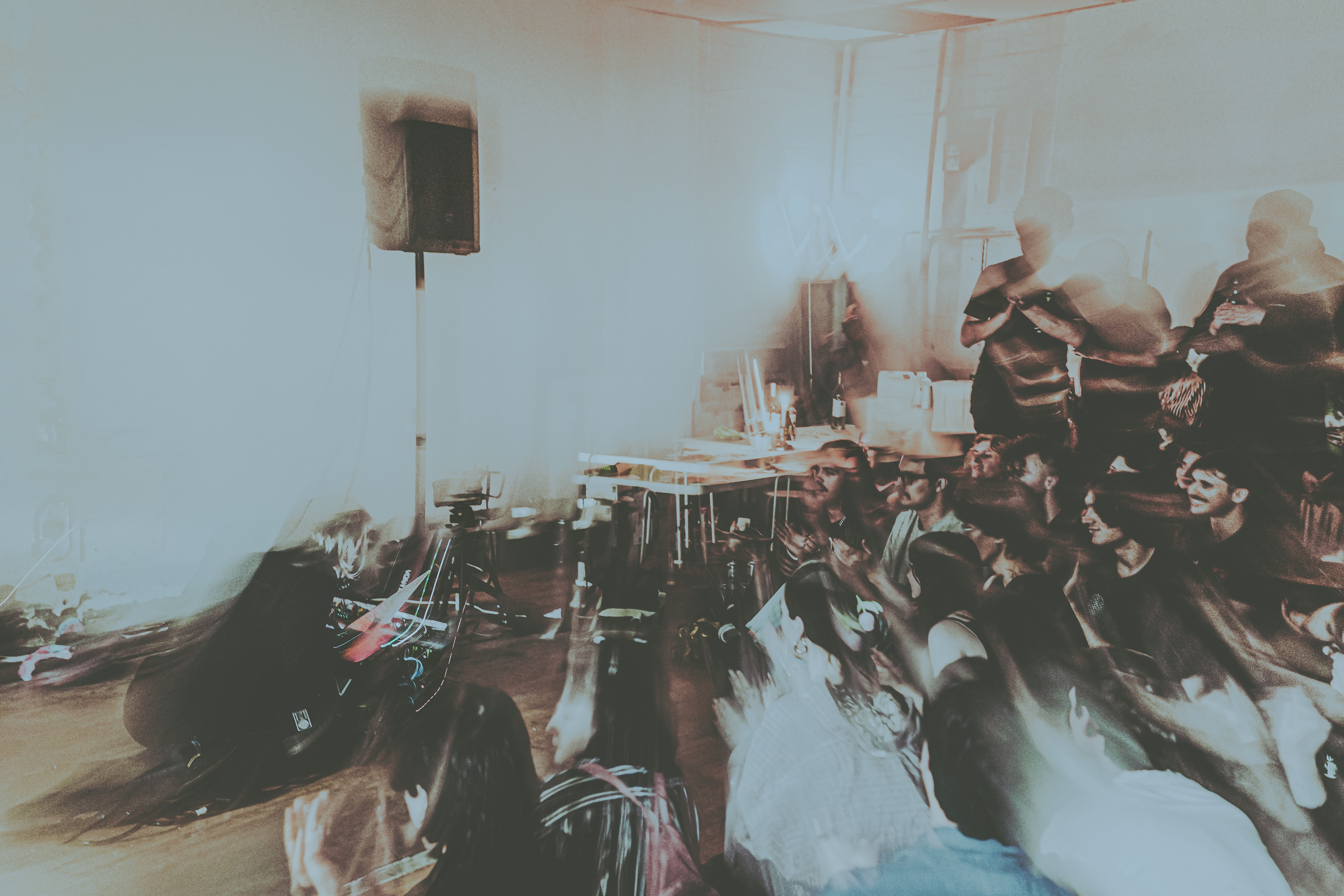
Across the room, however, the audience appeared strikingly receptive. Heads bobbed in loose, unselfconscious rhythm, bodies subtly moving perceptibly in response to the jagged sound. The atmosphere felt attentive as opposed to tense, as if many listeners had already accepted the terms of the encounter and were moving with the noise instead of against it. This physical responsiveness suggested a familiarity with discomfort, a willingness to allow sound to register through the body rather than be neatly interpreted. Throughout the performance, the mechanisms listeners typically rely on to orient themselves were systematically denied. Without rhythm or progression to anchor attention, the work offered no basis for anticipation or coherence. This denial of recognisable musical cues ultimately shaped its appeal, requiring endurance instead of immersion and positioning discomfort as an active mode of engagement. In line with Hegarty’s framing, enjoyment emerged through the ongoing oscillation between attraction and irritation, keeping the listener alert, unsettled, and engaged.
In this context, the performance worked not by overcoming discomfort, but by sustaining it. Abela’s joyful denial of resolution or ease was deliberate yet never alienating, positioning endurance as a central part of the listening experience. What lingered was not a melody, moment, or release, but an awareness of how attention was being held, tested, and repeatedly redirected. The work asked for commitment rather than surrender, rewarding persistence with heightened sensitivity rather than comfort.
_____g.s proved to be a fitting site for this encounter. Its proximity to the street, modest scale, and resistance to polish mirrored the conditions of the performance itself. The space did not insulate the work from the world outside, nor did it soften its edges. Instead, it reinforced the sense that this was an experience unfolding within everyday life, not apart from it, one that demanded presence amid distraction. In an era where listening is often fragmented and mediated, Abela’s performance foregrounded attention as something physical, effortful, and, at times, uncomfortable. It challenged the expectation that engagement should be seamless or immediately gratifying, suggesting instead that sustained focus may require friction. In doing so, the work reframed discomfort not as a barrier to enjoyment, but as a condition through which a different kind of listening might emerge.
Lucas “Granpa” Abela’s performance took place at _____g.s on 22 November 2025.
Footnote:
1. Paul Hegarty, Noise/Music: A History (New York: Continuum, 2007), Introduction, pp. 1–7.
Image credits: Lucas Abela performing at _____g.s, photographed by Joe Rae @convectionpattern.